A language on its own branch of the family tree
Before you open your first lesson, it helps to know what makes Armenian unusual: its own alphabet, its own branch of the Indo-European family, and a sound system that rewards learners who start with the letters, not the phrasebook.
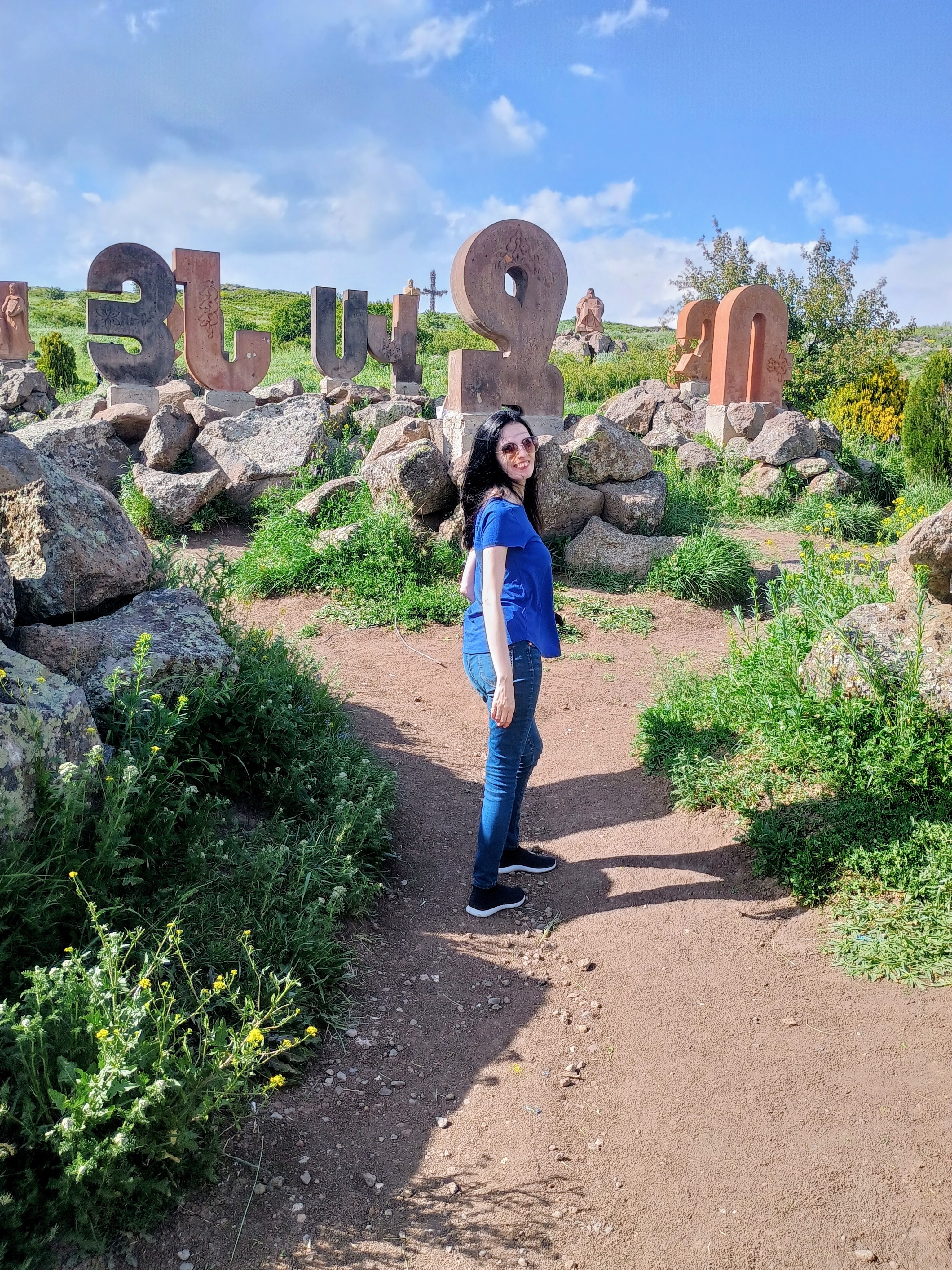
Facts about the Armenian language
Its own branch of Indo-European
Armenian isn't a dialect of Russian, Greek or Persian — it forms its own independent branch of the Indo-European language family, unrelated to any of its neighbors.
An alphabet built for the language
The Armenian alphabet was created around 405 AD by the scholar Mesrop Mashtots specifically to capture Armenian's sounds — it's still used almost unchanged today.
39 letters, no ambiguity
Each of the 39 letters maps to one sound. Once you know the alphabet, you can read any Armenian word aloud, even one you've never seen.
Two living standards
Modern Armenian exists in two standardized forms: Eastern Armenian, spoken in Armenia and much of the diaspora, and Western Armenian. Lezugo teaches Eastern Armenian.
Spoken well beyond Armenia
Millions of speakers live outside Armenia — in Russia, the United States, France, Georgia, Iran and Lebanon — keeping the language alive across a global diaspora.
No grammatical gender
Unlike French or German, Armenian nouns don't carry gender. Word order is comparatively flexible, and meaning leans heavily on suffixes and case endings.
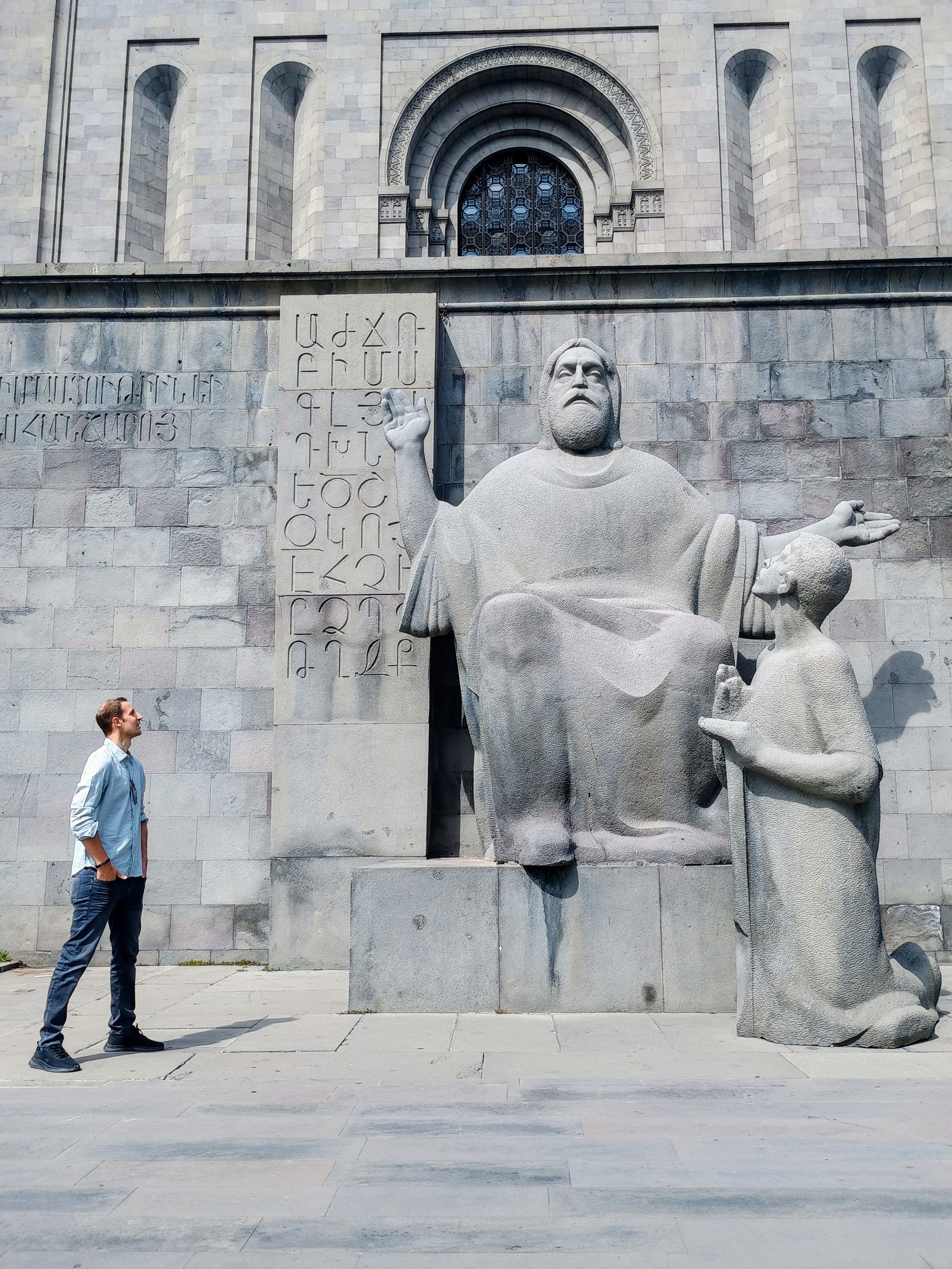
Mesrop Mashtots, 405 AD
A monk and scholar, Mashtots set out to give Armenian something it didn't have: a writing system of its own. Working with existing traditions but adapting them to Armenian's specific sounds, he created all 39 letters within a few years — not by translating another script, but by designing one for this language alone.
His statue now stands at the Matenadaran in Yerevan, home to one of the world's largest collections of ancient manuscripts — many of them written in the very alphabet he invented, and still legible to any Armenian reader today.
Your first Armenian sentence
Ես սովորում եմ հայերեն
Yes sovorum em hayeren
"I am learning Armenian."
Recognize the letters already? That's the alphabet doing its job. Lezugo builds every lesson on top of it — from single letters to full sentences like this one.
Most people quit at the alphabet. Don't.
Armenian's script is the single biggest reason people put off learning it — and the single biggest reason it's worth doing properly. Once the letters click, grammar and vocabulary move fast.
Lezugo is built around that order: alphabet first, then vocabulary and grammar in short daily lessons, with a spaced-repetition trainer that keeps new words from slipping away. Whether your reason is family, heritage, travel or plain curiosity, the app gives you a clear, structured path instead of a wall of grammar tables.
Where to start in Lezugo
A history and landscape worth knowing
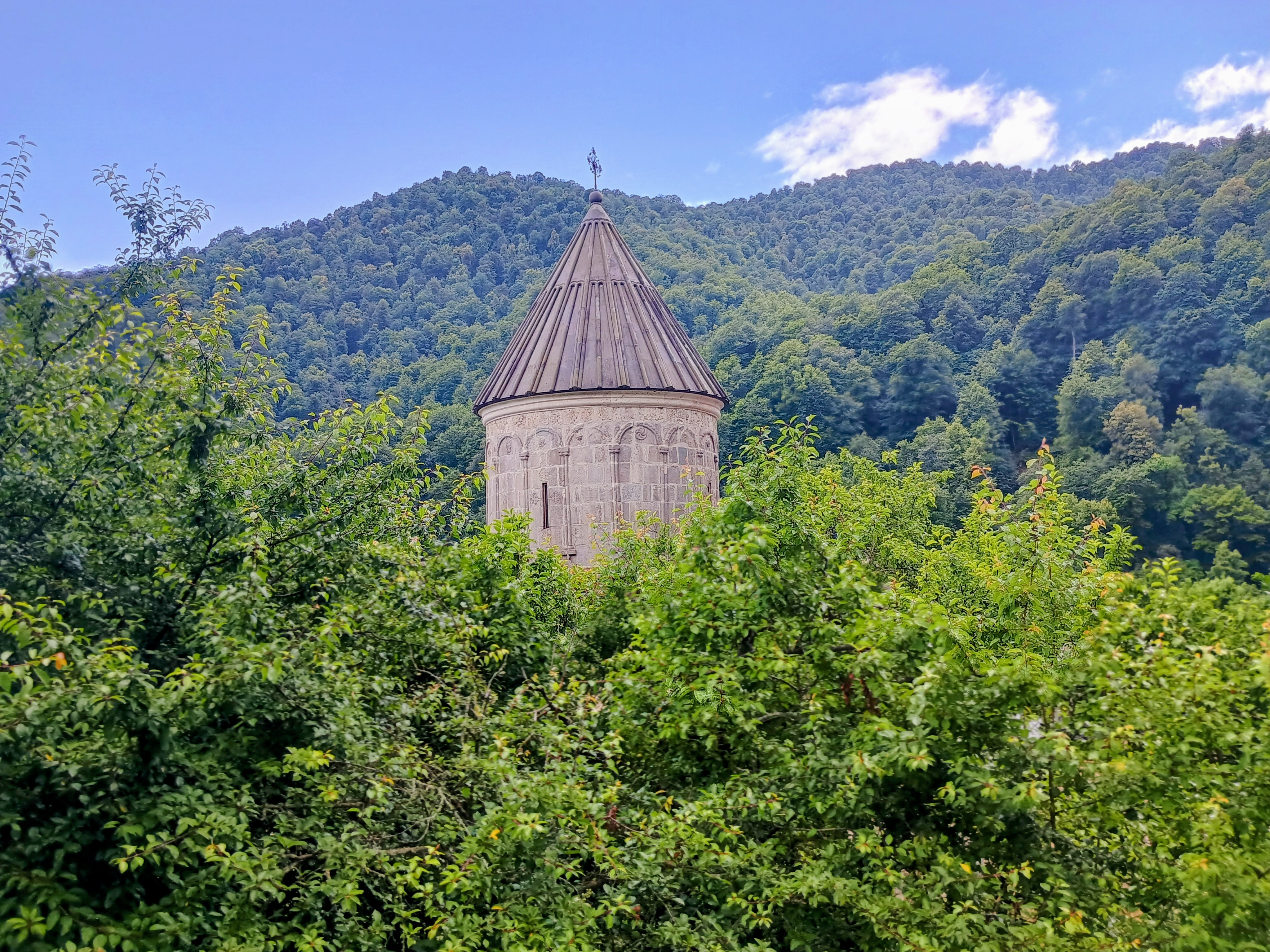
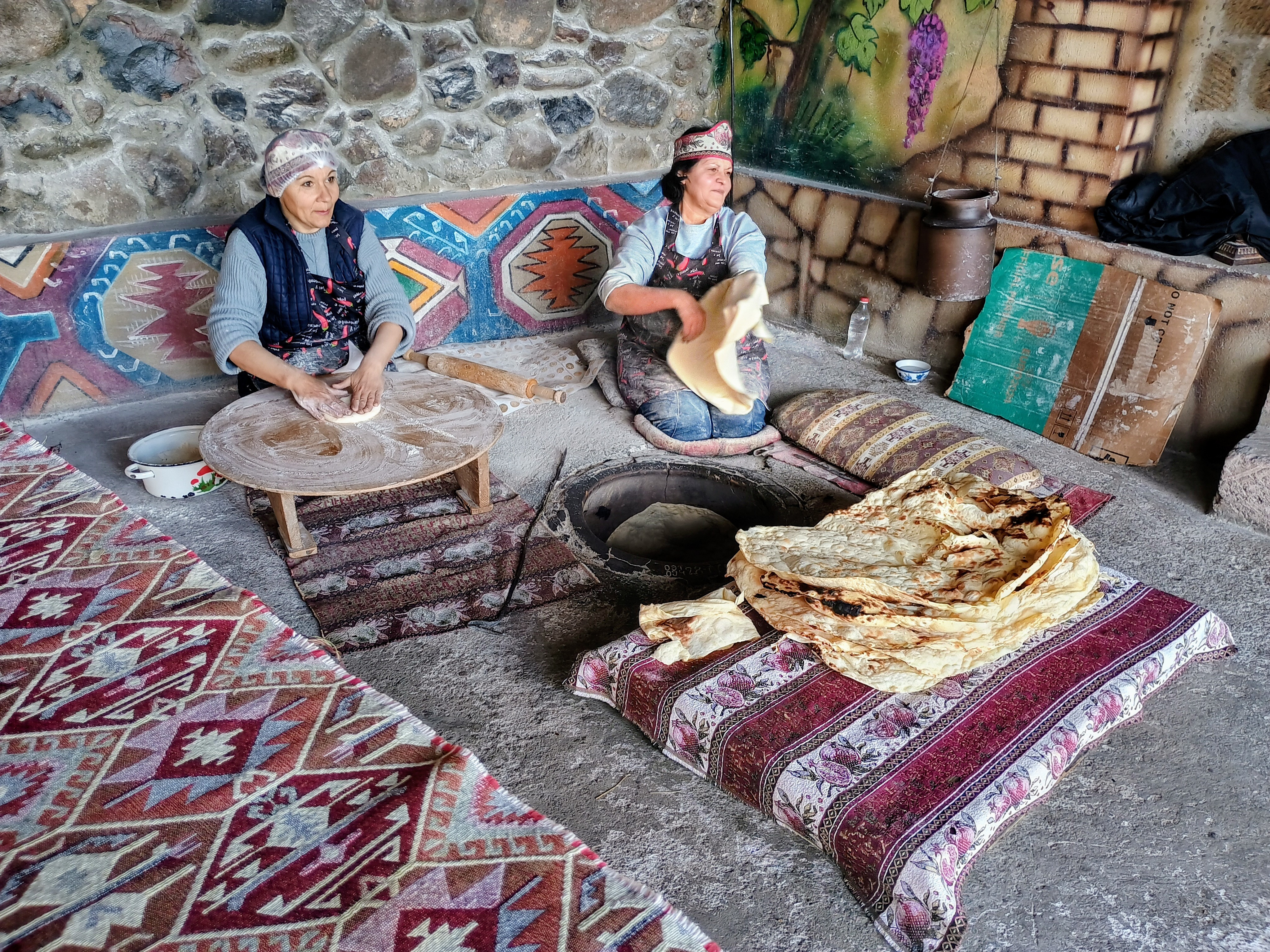
Armenian doesn't exist in isolation — it's tied to a specific history, landscape and everyday culture. Lezugo's collectible cards cover exactly this, alongside the lessons.

Start with the Armenian alphabet
Every Lezugo lesson builds on the 39 letters. Learn them free, right on this site.